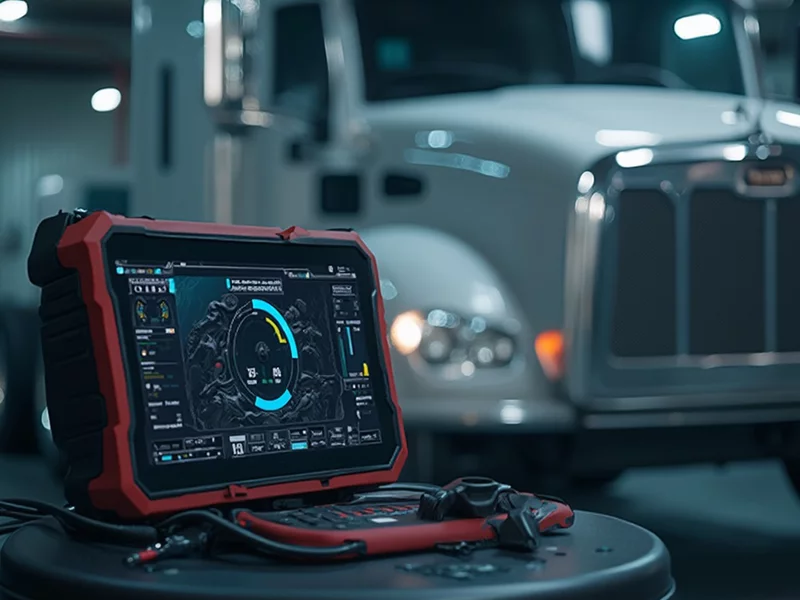
What is Real-Time Data Monitoring?
Gathers and analyzes engine performance data as it happens using sensors and diagnostic tools.
- Live performance tracking
- Instant alerts for faults
- Data-driven maintenance decisions
In a world where every moment counts, real-time data monitoring is revolutionizing the heavy-duty trucking industry. By leveraging advanced technologies, fleet operators can now make informed decisions that enhance efficiency and reduce costs. Here’s what you’ll discover about this game-changing approach!
This visual illustrates the process and benefits of integrating real-time data monitoring into heavy-duty truck engine diagnostics, highlighting key technological influences and operational advantages.
Gathers and analyzes engine performance data as it happens using sensors and diagnostic tools.
In today's fast-paced trucking world, real-time data monitoring has become a cornerstone of effective engine diagnostics. By leveraging advanced technologies, heavy-duty truck operators can now keep an eye on their vehicle's performance while on the go. This proactive approach not only enhances operational efficiency but also significantly minimizes unexpected breakdowns!
Real-time data monitoring involves using sensors and diagnostic tools to gather and analyze data on a truck's engine performance as it happens. This information can help identify issues before they escalate, ensuring that fleet managers and mechanics can take timely action. Think of it as having a constant pulse check on your engine's health!
At its core, real-time data monitoring provides immediate insights into the condition and performance of a truck's engine. It encompasses a range of metrics, including temperature, pressure, and RPM levels. By utilizing sophisticated telematics systems, operators receive updates that allow for quick reactions to potential problems.
This level of detailed observation not only keeps your truck running smoothly but also fosters a culture of preventative maintenance. The earlier you catch a problem, the less likely it is to turn into a costly breakdown! For more information on the market for commercial vehicle diagnostics, you can refer to this detailed report on commercial vehicle diagnostics.
Engine diagnostics play a crucial role in modern fleet management. By integrating real-time data monitoring with diagnostics, fleet operators can streamline their maintenance processes and improve overall vehicle reliability. This integration allows for a more cohesive approach to managing not just one truck but an entire fleet!
With effective engine diagnostics, fleet managers can make informed decisions that enhance performance and drive down costs. It’s about being proactive rather than reactive, leading to happier drivers and more efficient operations! Further insights into the importance of fleet management can be found in this comprehensive document on fleet management and alternative fuels.
Adopting real-time data monitoring systems can transform the way trucking operations function. The benefits are plentiful, and for those in the heavy-duty trucking industry, they can be game-changing. Let’s dive into some of the key advantages!
By utilizing these technologies, fleet operators can ensure their trucks remain operational and efficient, ultimately contributing to a more profitable business model!
To maximize the benefits of real-time data monitoring, consider integrating a centralized dashboard that consolidates all your engine metrics. This will allow you to visualize trends in performance and quickly identify any anomalies, thus enhancing your decision-making process for maintenance and operational strategies.
As we move further into the 21st century, technology integration in heavy-duty truck diagnostics becomes not just an advantage but a necessity. The future of diagnostics lies in leveraging advanced technologies like Artificial Intelligence (AI) and predictive analytics. These tools allow fleet operators and mechanics to gain deeper insights into vehicle performance and maintenance needs, ultimately enhancing operational efficiency.
At TorqueNest, I’ve seen firsthand how these technologies can transform the way we approach engine diagnostics. By adopting these innovations, we can stay ahead of potential issues, minimizing downtime and maximizing productivity. For a deeper understanding of advancements in vehicle technologies, the National Renewable Energy Laboratory provides valuable research.
AI and predictive analytics are revolutionizing how we monitor heavy-duty truck engines. These systems analyze historical data and identify patterns that can predict when a component might fail. Here are some ways AI and predictive analytics benefit fleet management:
Utilizing these technologies not only enhances the reliability of fleets but also empowers drivers to make informed decisions that promote safety on the road!
The landscape of heavy-duty truck diagnostics is ever-evolving. Keeping an eye on emerging trends will help fleet operators stay competitive. Some notable trends include:
By staying informed about these developments, we can implement solutions that significantly enhance our diagnostic capabilities and operational effectiveness.
The Internet of Things (IoT) has made a significant impact on real-time monitoring solutions for heavy-duty trucks. IoT devices collect data from various sensors and relay it back to fleet management systems, leading to smarter decisions. Key advantages of IoT integration include:
With IoT, we can create a connected ecosystem that enhances visibility and control over fleet operations. This integration ensures that we can respond quickly to potential issues, making our operations more efficient.
Real-time data monitoring involves using sensors and diagnostic tools to collect and analyze engine performance data as it happens, providing immediate insights into a truck's condition and allowing for proactive maintenance.
It leads to enhanced uptime through proactive maintenance, reduced operational costs due to informed decision-making, improved fuel efficiency, and overall better vehicle performance by addressing issues before they escalate.
AI and predictive analytics analyze historical data to forecast potential component failures, enabling preventive maintenance. They help prioritize maintenance efforts and reduce the risk of breakdowns, thereby enhancing safety.
IoT devices provide continuous monitoring of engine health, facilitate data-driven maintenance based on actual vehicle conditions, and improve communication between drivers and fleet managers, creating a more connected and efficient ecosystem.
Integrating advanced technologies like AI, predictive analytics, and IoT is crucial for gaining deeper insights into vehicle performance, staying ahead of potential issues, minimizing downtime, maximizing productivity, and remaining competitive in the evolving trucking industry.
Here is a quick recap of the important points discussed in the article:
Ethan Callahan is a seasoned diesel mechanic with over a decade of experience in the heavy-duty trucking industry. His expertise spans engine diagnostics, brake systems, and powertrain maintenance. As a passionate advocate for truck operators and fleet managers, Ethan is dedicated to providing clear, actionable insights that keep trucks on the road. Through TorqueNest, he aims to empower truck drivers and mechanics with the knowledge and resources they need for effective maintenance and repairs.